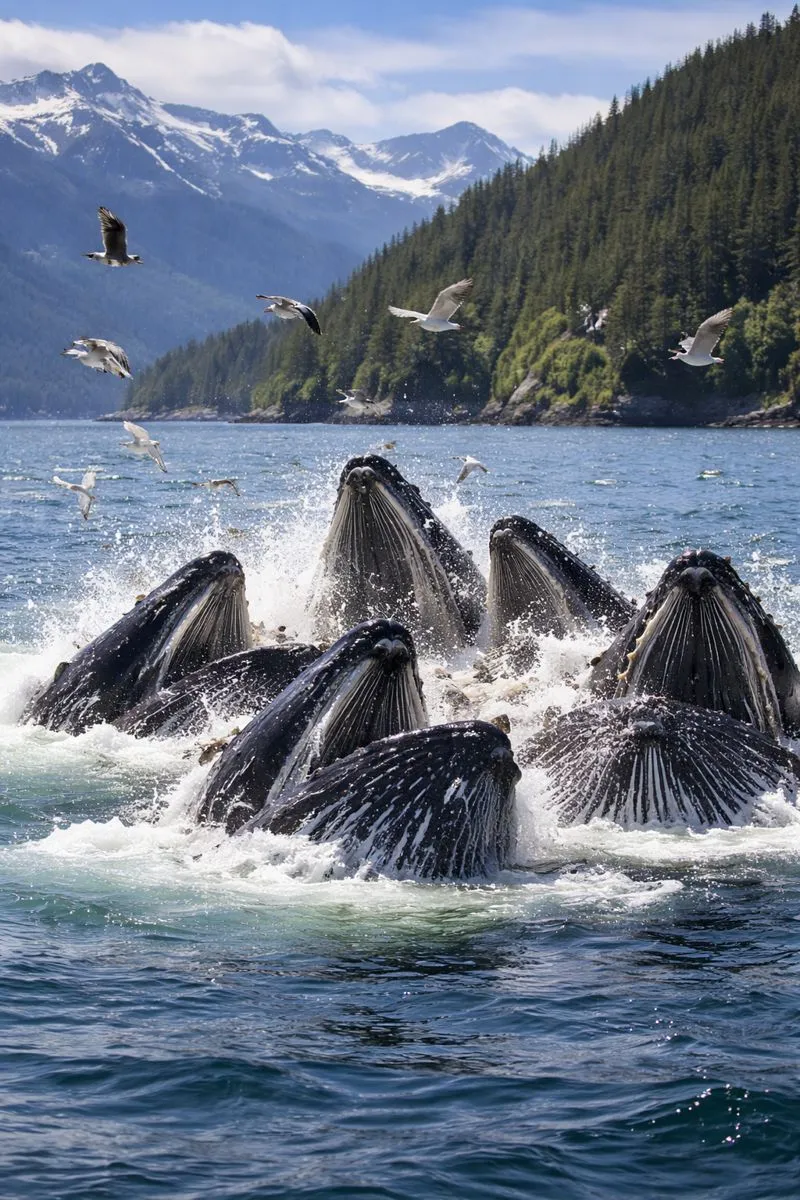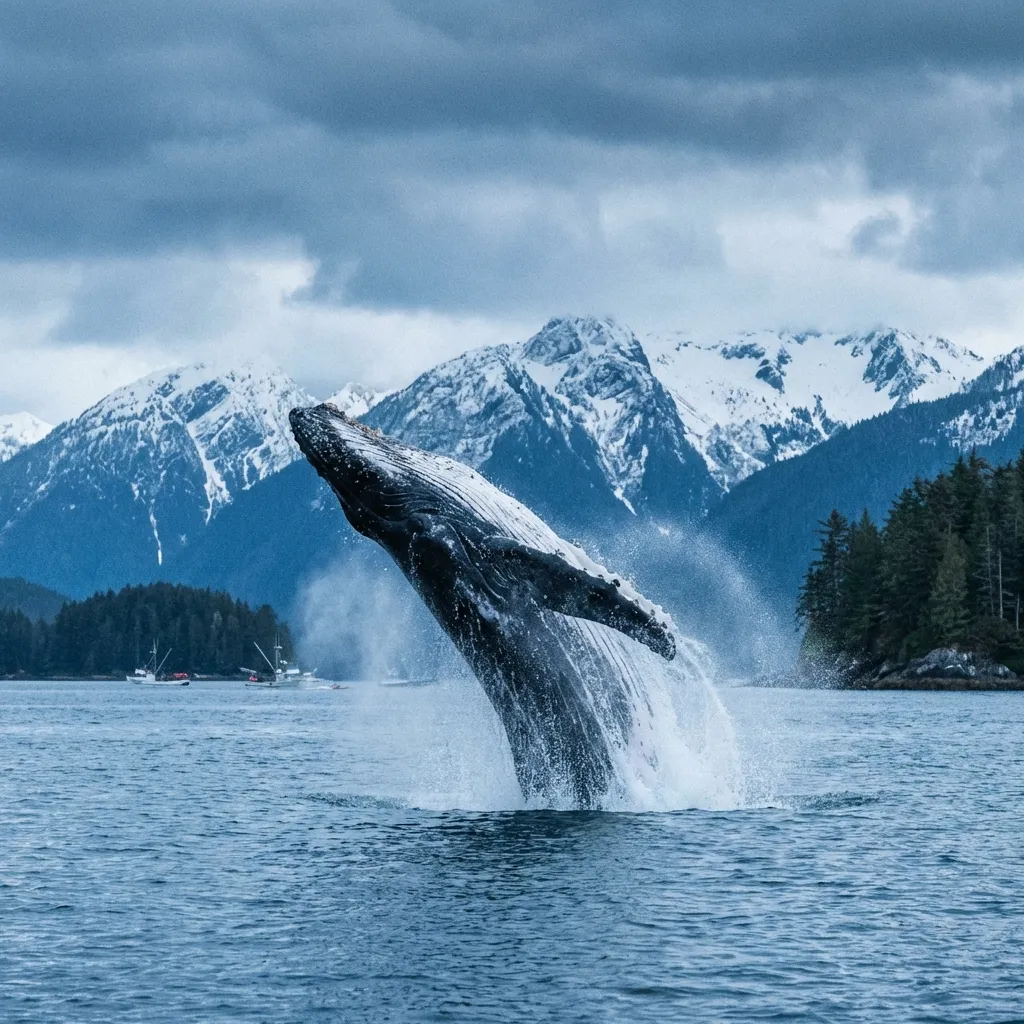
Humpback whale breaching in Sitka Sound Alaska during whale watching tour
Southeast Alaska's Premier Destination

Sitka Whale Watching

Experience world-class humpback whale viewing in the pristine waters of Sitka Sound. Witness the spectacular bubble-net feeding - a behavior Sitka is uniquely famous for.

Plan Your Trip ↓
Why Sitka for Whale Watching?

Sitka is one of the best spots in Southeast Alaska for humpback whale watching, with an impressive 99.9% success rate for wildlife viewing. The nutrient-rich waters of Sitka Sound provide ideal feeding grounds that attract humpbacks reliably throughout the season.

šŸ‹

Humpback Whales

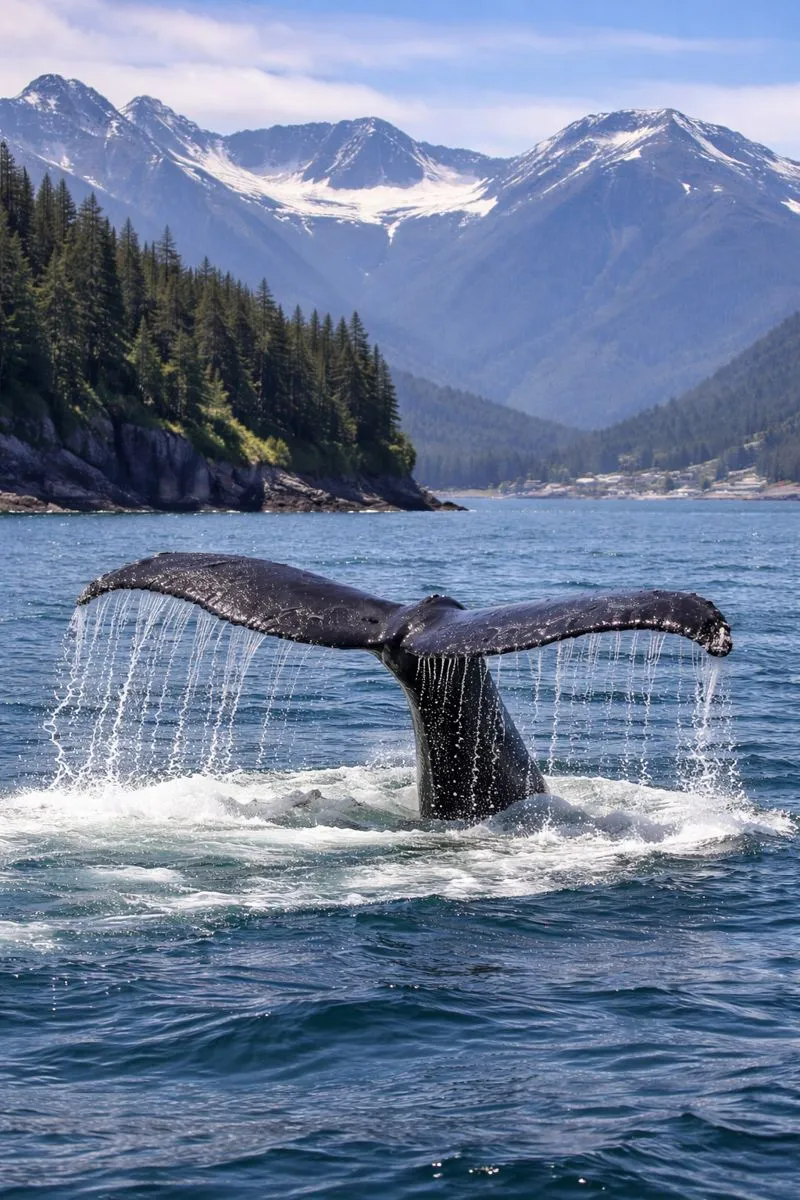
Peak viewing May-September with feeding, breaching, and tail-slapping behaviors.

ā­•

Bubble-Net Feeding

March is exceptional for this spectacular cooperative hunting technique. Sitka is THE world destination.

🦭

Marine Wildlife

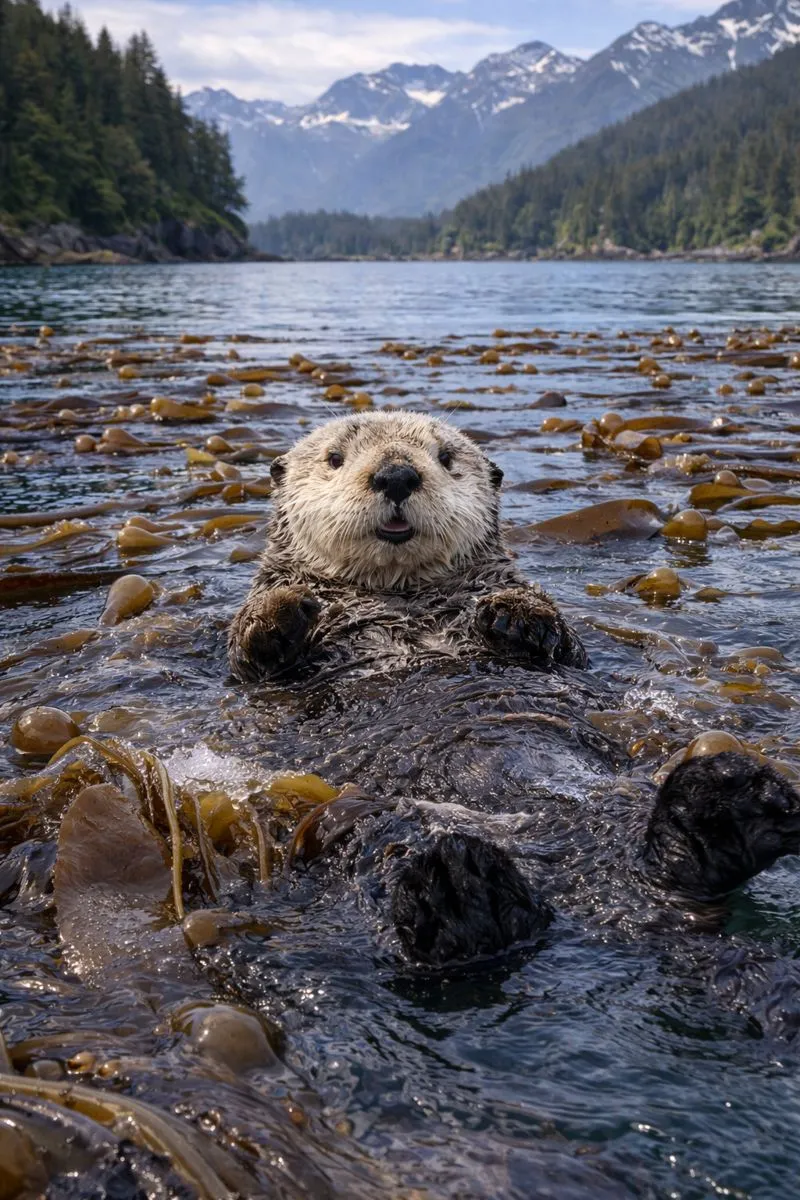
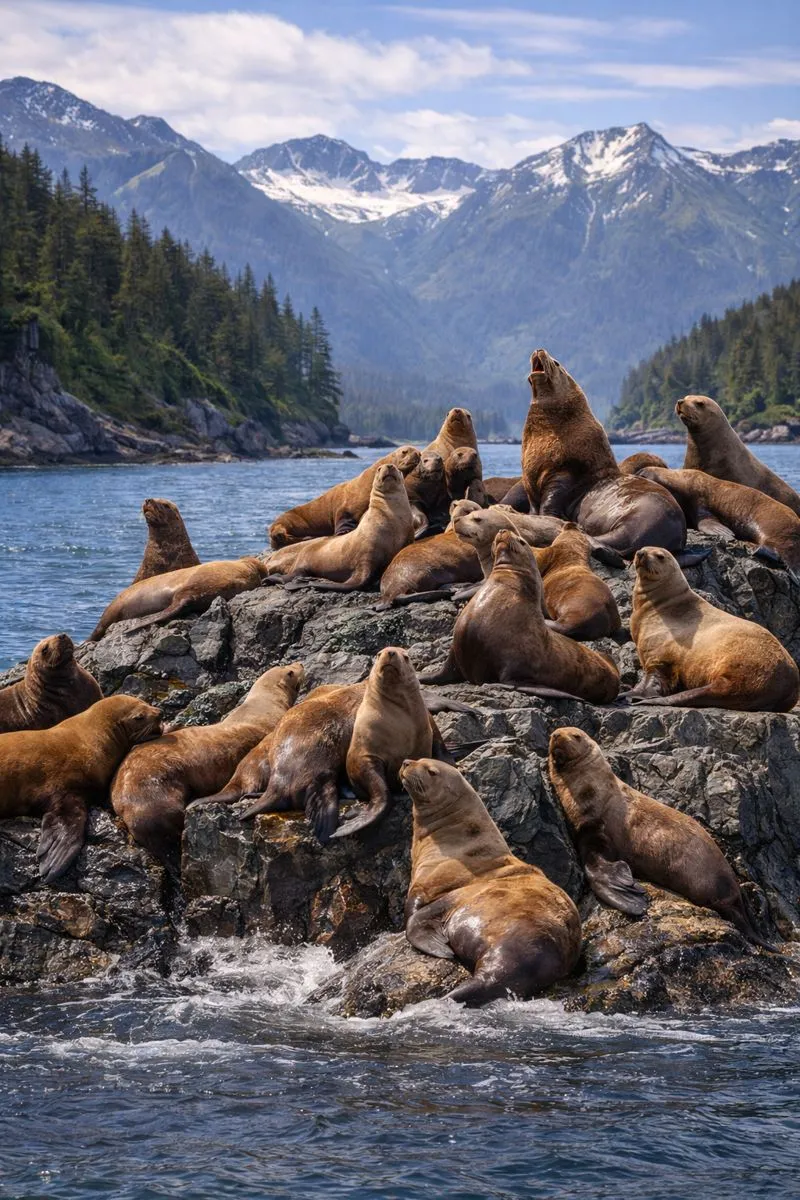
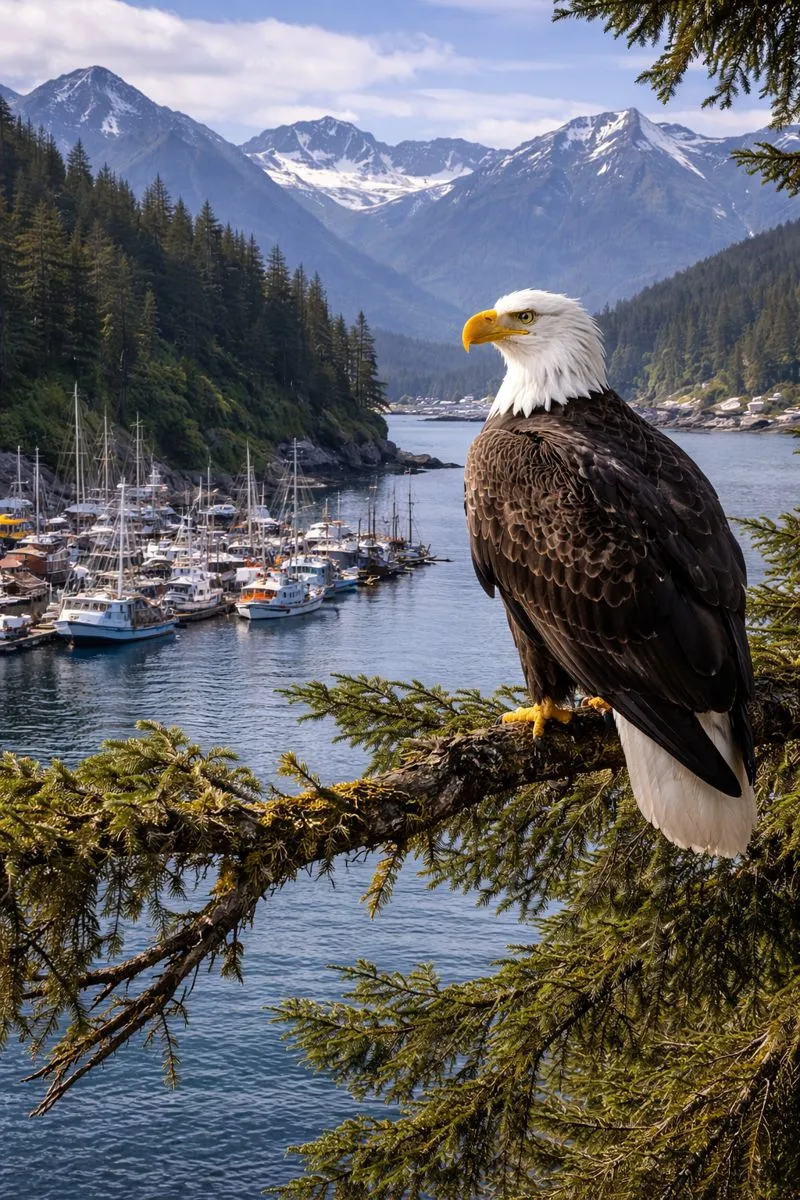
Sea otters, Steller sea lions, harbor seals, plus bald eagles and puffins.

šŸŽÆ

99.9% Success

Operators report exceptional sighting rates in these rich feeding grounds.

🚤

Small-Boat Tours

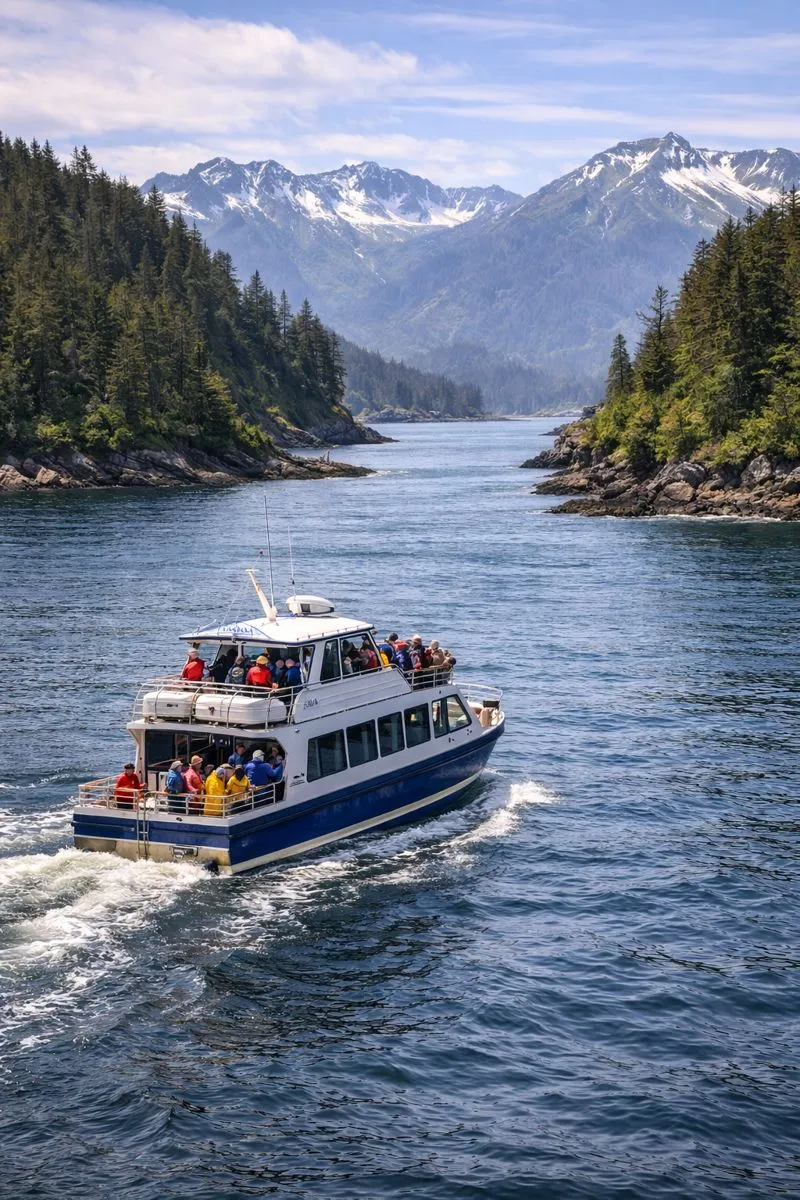
Intimate 4-16 passenger vessels for closer wildlife encounters.

šŸŽ¬

BBC Documentary Site

Planet Earth and Our Planet chose Sitka for bubble-net feeding footage.

Best Time to Visit

June and July offer peak whale activity with the highest chances of sightings. However, March is exceptional for witnessing bubble-net feeding during the herring spawn.

Month Highlights Weather
March ⭐ Bubble-net feeding peak, herring spawn Cool (30-40s°F)
May Season begins, fewer crowds Mild, longer days
June-July ⭐⭐ Peak activity, best weather Warmest (50-65°F)
August Excellent viewing continues Warm, occasional rain
September Migration prep, fewer tourists Cooling, rain increases

July: Overall Best Month

July offers the warmest weather, longest daylight hours (sunrise ~4 AM, sunset ~10 PM), and peak whale activity. Temperatures range from high 40s to mid-60s°F.

March: Bubble-Net Season

If witnessing the dramatic bubble-net feeding is your priority, March is arguably the single best month despite cooler temperatures. The herring spawn concentrates whales for spectacular cooperative hunting displays.

Bubble-Net Feeding

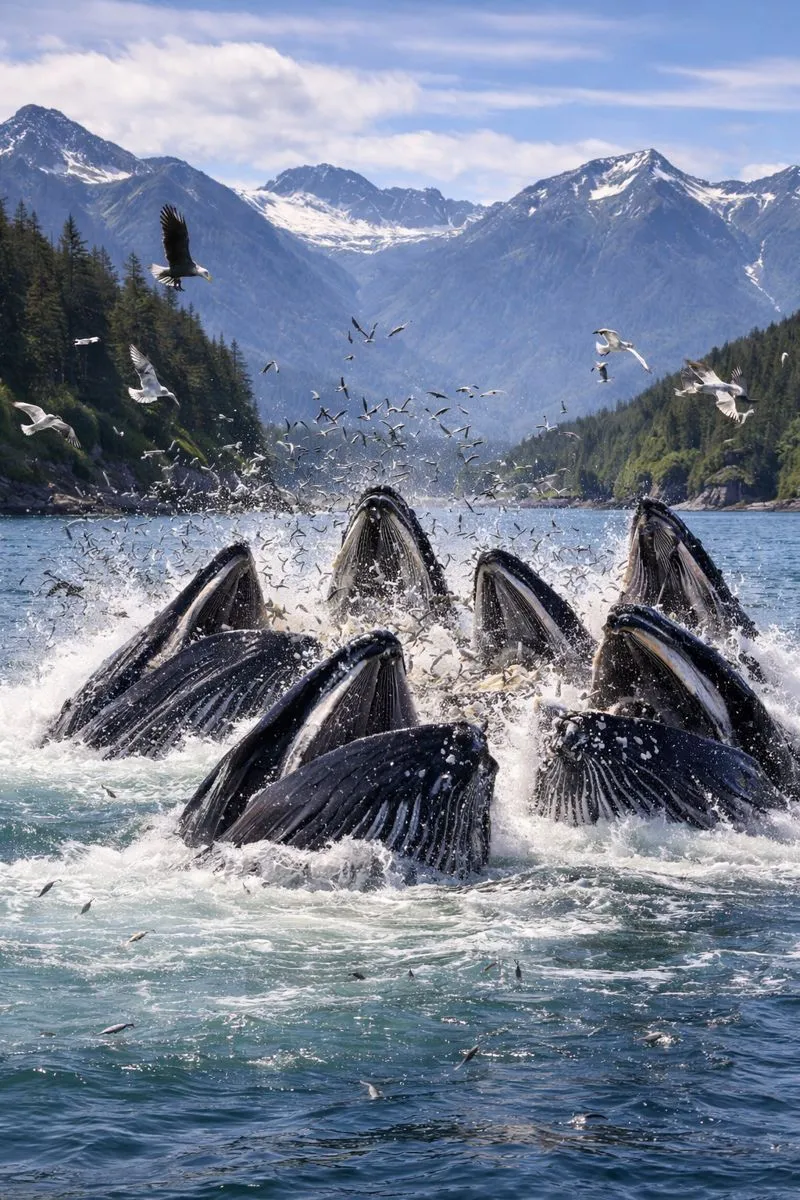
Bubble-net feeding is a remarkable cooperative hunting technique where groups of humpback whales work together to trap fish. Sitka is the most reliable place on Earth to observe this behavior.

Whales Lunging Through Bubble Net

How It Works

  1. One whale dives deep below a school of herring, exhaling bubbles through its blowhole
  2. Other whales join, swimming in a spiral while releasing bubbles to form a cylindrical "net"
  3. Bubbles trap and confuse fish, which perceive bubbles as a barrier
  4. A feeding call signals the finale - a high-pitched vocalization
  5. All whales lunge upward simultaneously with mouths wide open, engulfing thousands of fish

Why Sitka Is Exceptional

Peak Timing

Late March through first week of April is the absolute peak, coinciding with the herring spawn. The behavior slows down by April and largely stops after the herring spawn ends.

Top Tour Operators

All operators depart from Crescent Harbor (330 Harbor Dr) and run 2-3 hour small-boat tours:

Operator Rating Notes
Captain Gary's 5.0 ⭐ (300+) Women-owned, small-group focus
Sitka Sea Level 5.0 ⭐ (200+) Family-friendly, flexible hours
Coastal Tours 5.0 ⭐ Dedicated whale watching, small groups
Gallant Adventures 5.0 ⭐ All-day operation, good for kids
Ben's Sitka Boat Tours 5.0 ⭐ Small groups, family-friendly
Sitka Sound Tours 4.8 ⭐ Indigenous & women-owned, LGBTQ+ friendly

What to Expect

What to Bring

Whale Species by Month

Different species have distinct peak viewing windows in Alaska:

Species Best Months Behaviors
Humpback Whales May-Sep (peak Jun-Aug) Bubble-net feeding, breaching, tail slapping
Gray Whales April-June Spring migration, spyhopping
Orcas May-September Occasional sightings, coordinated hunting
Sea Otters Year-round Floating, grooming, tool use
Steller Sea Lions Year-round Hauled out on rocks, swimming

Sitka vs. Other Alaska Destinations

Juneau has a slight edge specifically for whale watching, while Sitka offers comprehensive marine wildlife experience. Sitka's small-boat tours (4-6 passengers) allow closer approaches than larger vessels in other ports.

Frequently Asked Questions

June-July for peak humpback activity with warmest weather and longest days. March is exceptional for bubble-net feeding during the herring spawn - arguably the most spectacular wildlife event in Alaska.

Primarily humpback whales (May-September). Also gray whales during spring migration (April-June) and occasional orcas. Tours also regularly spot sea otters, Steller sea lions, harbor seals, bald eagles, and puffins.

Excellent! Tour operators report a 99.9% success rate for wildlife viewing. The nutrient-rich waters of Sitka Sound provide ideal feeding grounds. Sitka offers comprehensive marine wildlife experience with small-boat intimacy.

A spectacular cooperative hunting technique where groups of humpback whales create curtains of bubbles to trap fish, then lunge upward simultaneously. Sitka is the most reliable place on Earth to witness this behavior, especially during March herring spawn. The BBC filmed Planet Earth footage here.

Most tours are 2-3 hours on small boats (6-16 passengers). During March bubble-net season, specialized photography tours run 8 hours with 30-70+ feeding events per trip. Tours depart from Crescent Harbor downtown.

Yes, especially for June-August when prime season dates fill quickly. March bubble-net feeding tours book up months in advance - reserve as early as possible. Cruise ship visitors should book tours timed to ship schedules.